TL;DR
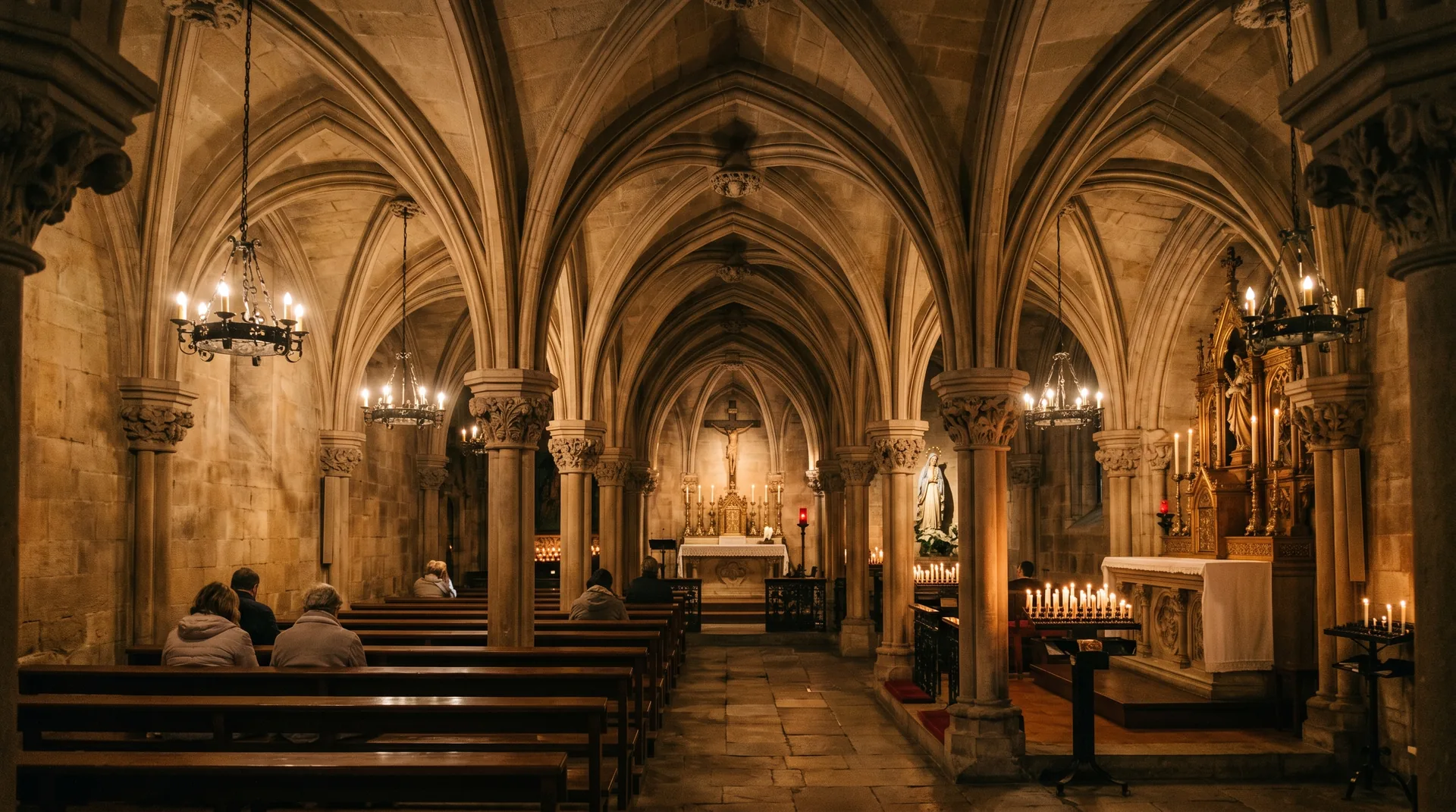
The Sagrada Família crypt is the oldest part of the building, completed in 1889 in neo-Gothic style before Gaudí reshaped the project. Antoni Gaudí is buried here in a simple tomb in the Chapel of Our Lady of Mount Carmel. The crypt is open to all ticket holders and is an active chapel where daily Mass is still celebrated. Most visitors walk past it — don't.
What Is the Sagrada Família Crypt?
The crypt is the underground chapel beneath the main basilica floor. It is the foundation on which the entire Sagrada Família was built — physically and historically. When construction began in 1882, the crypt was the first element completed. It remains structurally separate from Gaudí's later work: a neo-Gothic space that predates his involvement and survives as the only part of the building designed by the original architect, Francesc de Paula del Villar.
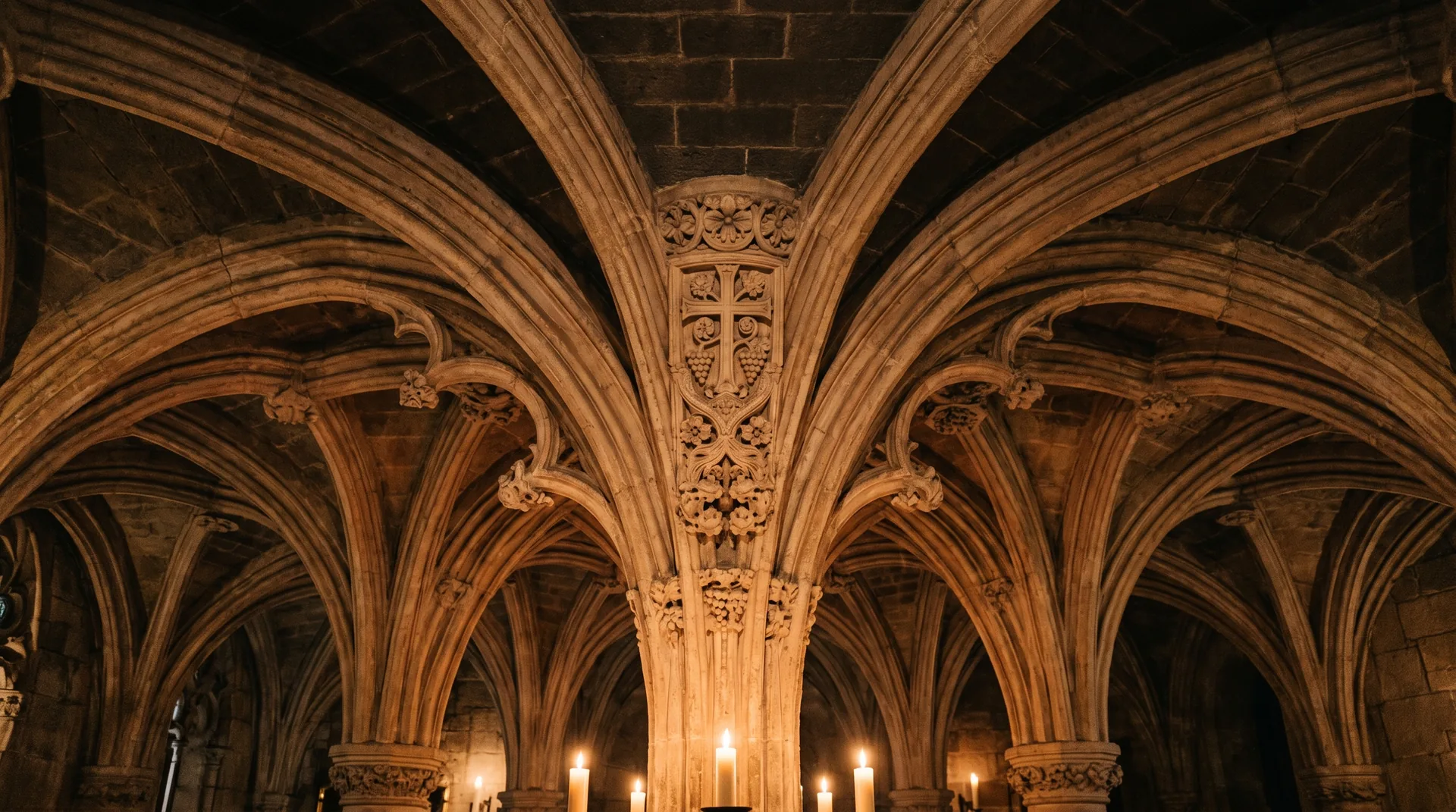
Villar's design followed the conventions of 19th-century Gothic Revival architecture: pointed arches, ribbed stone vaults, slender columns with foliate capitals, and a palette of grey stone and candlelight. When Gaudí took over in 1883, he made targeted modifications to the crypt — altering the capital design and adjusting some structural elements — but he preserved the overall Gothic character that Villar had established.
Today the crypt functions as an active Catholic chapel. Daily Mass is held here. The contrast between the crypt's dimly lit medieval atmosphere and the soaring, light-filled nave above represents the full arc of the building's history — from 19th-century Gothic Revival to Gaudí's radical reinvention of sacred architecture. You can read more about the full architectural scope of the Sagrada Família to understand how the crypt fits into the whole.
Gaudí's Tomb: Where the Architect Is Buried
Antoni Gaudí died on 10 June 1926. Three days earlier, he had been struck by a tram on Carrer de Gràcia in Barcelona's Eixample district. Because he was dressed simply and carried no identification, he was initially taken to a pauper's hospital. Barcelona only recognised its greatest architect after several hours.
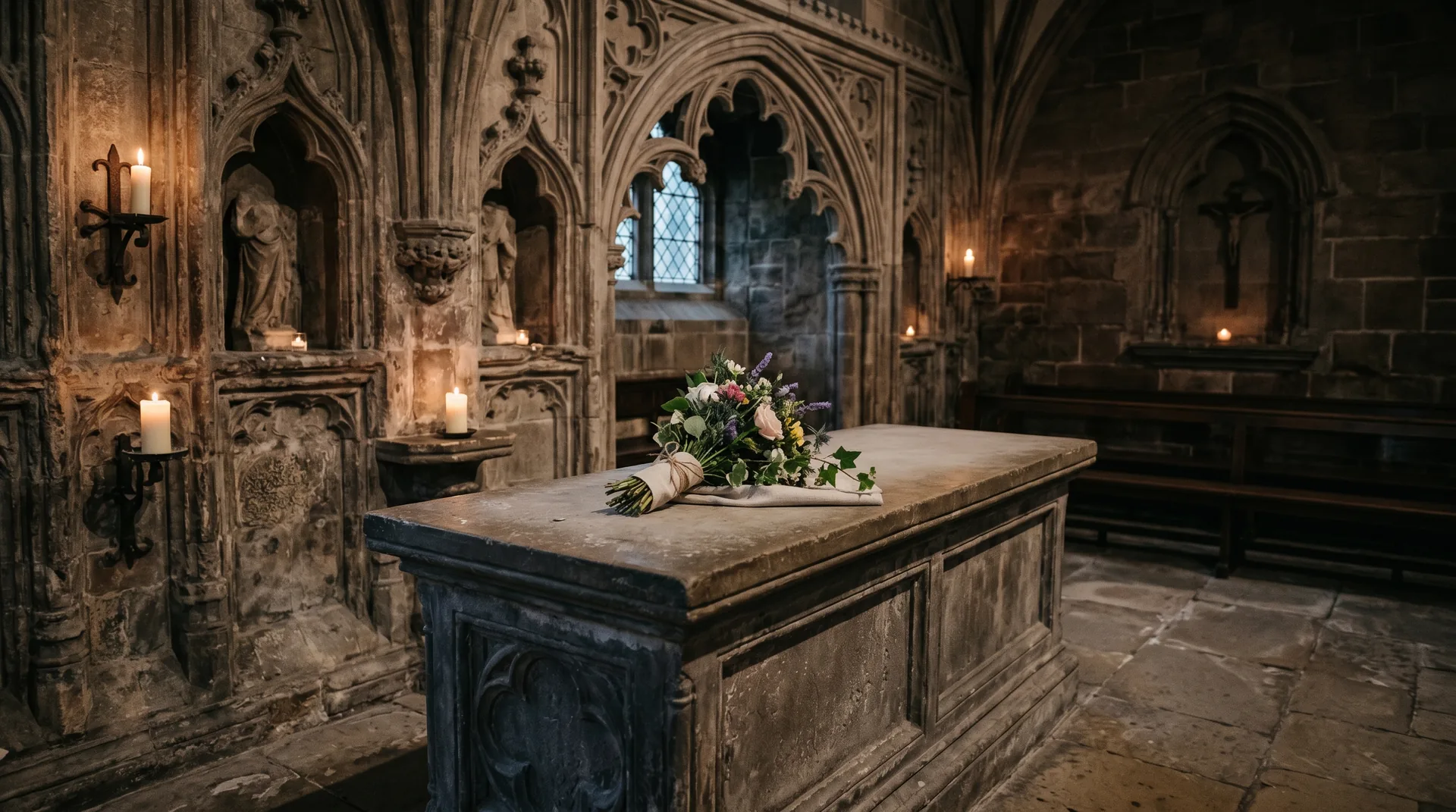
He was 74 years old and had dedicated the final 12 years of his life entirely to the Sagrada Família, living in a workshop on the construction site and eating almost nothing. He had no family left. His wish to be buried in the basilica was granted. He was interred in the Chapel of Our Lady of Mount Carmel within the crypt — the chapel dedicated to the Virgin Mary to whom Gaudí had a particular devotion.
The tomb is deliberately plain: a smooth stone slab, a small floral bouquet kept fresh by the building's staff, and a plaque identifying him. For a man who built the most elaborate church of the modern era, the simplicity of his resting place is intentional. Gaudí considered personal humility a religious obligation. He is said to have worn worn-out clothes, eaten frugally, and walked everywhere for the last decade of his life.
Visitors can view the tomb through a window in the chapel door. The chapel itself is kept closed. The window view is clear and the space is quiet enough for genuine reflection — a rarity in one of the world's most-visited buildings. To understand the man buried here more fully, read our complete biography of Antoni Gaudí.
The Neo-Gothic Architecture of the Crypt
Villar designed the crypt in 1882 following the Gothic Revival principles that dominated European ecclesiastical architecture in the 19th century. The style looked back to medieval cathedrals — particularly French Gothic — and reproduced their structural and decorative elements with modern stone-cutting precision.
The crypt has seven apses (semicircular recesses) arranged around a central altar. Each apse is dedicated to a different saint or sacred mystery. The vaulted ceiling uses ribbed stone work typical of 13th-century French Gothic cathedrals. The columns have foliate capitals — carved stone foliage at the point where the column meets the arch — a standard Gothic vocabulary that feels conservative compared to Gaudí's later organic forms above.
When Gaudí took over, he was critical of Villar's design, calling it too conventional. He modified several elements: the column bases, some capital carvings, and the drainage of the crypt (a practical but significant intervention — the original design had serious water ingress problems). But he stopped short of a full redesign, recognising that demolishing and rebuilding the crypt would lose years of progress and substantial funds.
The result is a building with two distinct architectural personalities separated by a single staircase. The crypt is solemn, dark, and Gothic. The nave above is ecstatic, flooded with coloured light, and completely unlike any medieval precedent. Both are products of the same extraordinary site. The interior architecture guide covers what awaits you above.
Visiting the Crypt: What to Know
The crypt is included with all standard admission tickets — no separate booking required. It is accessed via stairs from the nave level, signposted inside the building. The space is smaller and quieter than the nave, and tends to be less crowded. Most visitors who discover it describe it as one of the highlights of their visit.
Photography is permitted. Be respectful — Mass is held daily and the chapel is a working place of worship. The dress code applies here as everywhere in the building: shoulders and knees covered. See our full dress code guide if you need details.
Budget 15–20 minutes for the crypt as part of your visit. It pairs naturally with the museum, which is in the same lower level of the building. Together, the crypt and the museum represent the oldest and the most historically rich layer of the Sagrada Família — the parts most visitors rush past on their way back to the exit.