History

Gaudí's Buildings in Barcelona — Complete Guide

Seven UNESCO World Heritage Sites. Casa Batlló, La Pedrera, Park Güell, Palau Güell, and more — the complete guide to every Gaudí building you can visit.

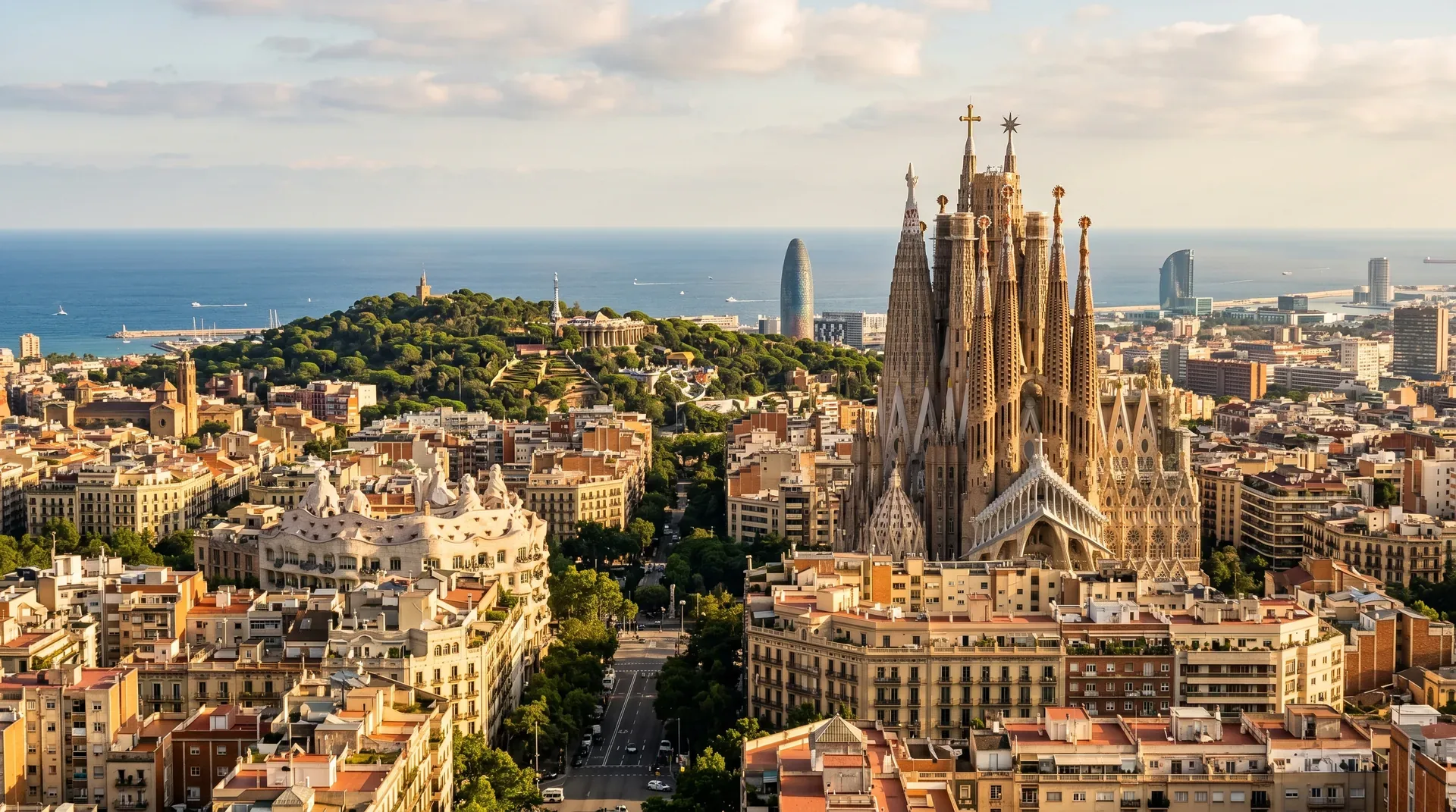
Collage view of Gaudí's Barcelona buildings including the Sagrada Família, Casa Batlló, and Park Güell

TL;DR

Antoni Gaudí left Barcelona seven UNESCO World Heritage buildings. The Sagrada Família is the most important. Casa Batlló is the most theatrical interior. Park Güell is the best outdoor site. Casa Milà has the best rooftop. All require advance booking. Two days covers the major four comfortably; three days allows you to add Palau Güell and Casa Vicens.

Antoni Gaudí's Barcelona Legacy

Antoni Gaudí was born in Reus, Catalonia in 1852 and moved to Barcelona to study architecture. He never left. Over the next 50 years, he transformed the city — leaving a built legacy that is unlike anything produced by a single architect anywhere in the world. Seven of his works are now collectively listed as UNESCO World Heritage Sites under the title "Works of Antoni Gaudí."

The buildings span Gaudí's entire career, from the Moorish-influenced Casa Vicens (1885) to the evolving Sagrada Família he worked on until his death in 1926. They show a sustained development from decorative exoticism through structural naturalism to the radical geometric experiments of his final decades. Read our full biography of Antoni Gaudí for the story behind the buildings.

The 7 Major Gaudí Buildings in Barcelona
01

Sagrada Família

UNESCO
€26–€58+

1883–present · Carrer de Mallorca 401, Eixample

Gaudí's life work and the world's most ambitious active construction project. He devoted 43 years to it and is buried in the crypt. The most important piece of architecture being built in the 21st century.

Don't miss: The nave interior in morning light, tower access, the museum and crypt

02

Casa Batlló

UNESCO
€35–€49+

1904–1906 · Passeig de Gràcia 43, Eixample

A domestic building transformed into something completely alien. The dragon-scale roof, bone-like columns, and undulating facade are among the most photographed sights in Barcelona. The interior — all curves, no straight lines — is Gaudí at his most theatrical.

Don't miss: The central light shaft tiled in 33 shades of blue, the Noble Floor, and the rooftop

03

Casa Milà (La Pedrera)

UNESCO
€25–€34

1906–1912 · Passeig de Gràcia 92, Eixample

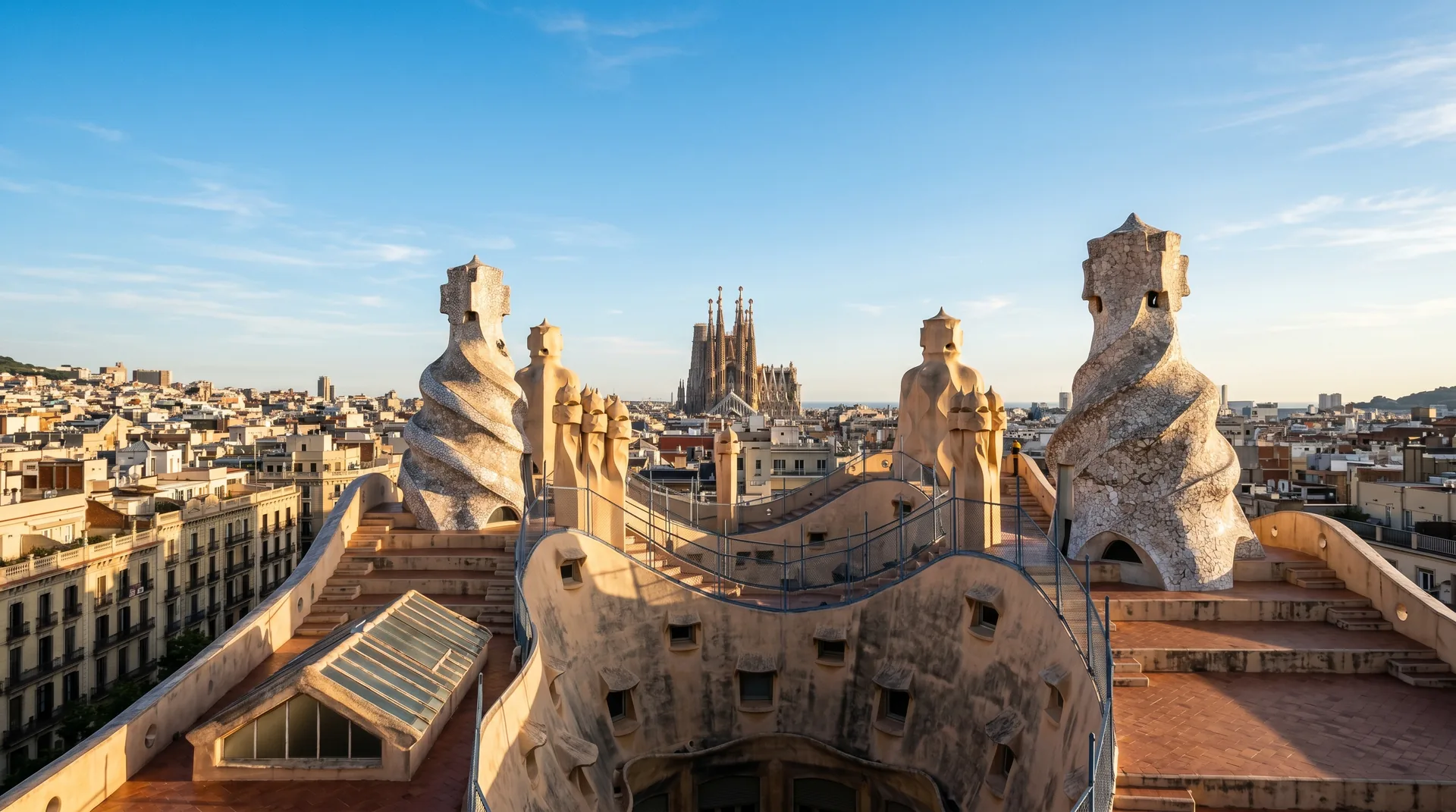
Gaudí's last secular building before he devoted himself entirely to the Sagrada Família. The undulating stone facade and famous rooftop — with its warrior-helmet chimneys and 360° views — make this one of the most visited buildings in Spain.

Don't miss: The rooftop terrace, the Espai Gaudí museum in the attic, the interior courtyards

04

Park Güell

UNESCO
€10 (Monumental Zone)

1900–1914 · Carrer d'Olot, Gràcia district

Originally conceived as a garden city for the Barcelona bourgeoisie, the project was abandoned after only two houses sold. The site was donated to the city and became one of Barcelona's defining landmarks. The mosaic terrace, the gingerbread gatehouses, and the forest of inclined stone columns are unmissable.

Don't miss: The Dragon Terrace mosaic, the Hypostyle Hall, the view of Barcelona from the terrace

05

Palau Güell

UNESCO
€12

1886–1890 · Carrer Nou de la Rambla 3–5, Raval

Gaudí's first major commission from his patron Eusebi Güell. Built as a private residence and entertainment palace just off La Rambla. The rooftop chimneys — some covered in trencadís mosaic — are an early sign of what was to come. The central hall with its parabolic dome is extraordinary.

Don't miss: The central hall parabolic dome, the rooftop chimneys, the basement stables

06

Casa Vicens

UNESCO
€16

1883–1885 · Carrer de les Carolines 18–24, Gràcia

Gaudí's first major building, completed when he was 31. The Moorish-influenced facade with green and white ceramic tiles and the cast-iron palm-leaf fence show a younger architect absorbing influences before developing his own language. A UNESCO site since 2005 that many visitors overlook.

Don't miss: The ceramic tile facade, the Moorish smoking room interior, the garden

07

Colònia Güell Crypt

UNESCO
€7

1908–1914 · Santa Coloma de Cervelló (30 min from Barcelona)

Technically outside Barcelona but worth the trip for architecture enthusiasts. Gaudí designed the crypt of a workers' colony church as a structural laboratory — the first time he used hanging chain models to calculate the parabolic arches that would later appear in the Sagrada Família. An overlooked UNESCO masterwork.

Don't miss: The inclined columns, the stained glass windows, the hanging model display

The distinctive organic rooftop chimneys of Casa Milà (La Pedrera) with Barcelona behind

How to Plan Your Gaudí Visit

All seven buildings require advance booking, especially in summer (June–September). Tickets sell out weeks ahead for the Sagrada Família, Casa Batlló, and Park Güell. Book everything before you arrive in Barcelona, not on the day.

One day: Sagrada Família (morning) + Park Güell (early afternoon). You'll have seen the two most important sites and be done by 3:00 PM.

Two days: Day 1 — Sagrada Família (9:00 AM) + Casa Milà rooftop (4:00 PM). Day 2 — Park Güell (9:00 AM) + Casa Batlló (afternoon).

Three days: Add Palau Güell (near La Rambla — pairs naturally with a Gothic Quarter afternoon) and Casa Vicens (in Gràcia — small and fast). The Colònia Güell crypt is worth the 30-minute train trip for architecture enthusiasts.

Start with the Sagrada Família

Gaudí's masterpiece and greatest building — book your entry slot before the morning slots sell out.

Free cancellation Instant confirmation 4.8★ · 50k+ reviews

Explore the Sagrada Família

Gaudí Buildings FAQs

Click any question to reveal the answer.

How many buildings did Gaudí design in Barcelona?

Antoni Gaudí designed at least 20 works throughout his career, of which 7 major buildings or complexes survive in Barcelona and are open to visitors today. Seven of his works — including the Sagrada Família, Casa Batlló, Casa Milà, and Park Güell — are UNESCO World Heritage Sites, listed under the collective title 'Works of Antoni Gaudí.'

Which Gaudí building is most worth visiting?

The Sagrada Família is Gaudí's most important work and the most impressive architecturally. For interior experience, Casa Batlló is the most dramatic domestic space. Park Güell offers the best outdoor experience and city views. For most visitors with one day, the Sagrada Família in the morning and Park Güell in the afternoon is the best combination.

Can you see all Gaudí buildings in Barcelona in one day?

Not comfortably. The seven major Gaudí sites span the city. Seeing all in one day would mean rushing each one. A realistic two-day itinerary: Day 1 — Sagrada Família (morning) + Casa Milà/La Pedrera (afternoon). Day 2 — Park Güell (morning) + Casa Batlló + Palau Güell (afternoon). Casa Vicens requires a separate trip to the Gràcia neighbourhood.

Which Gaudí buildings are UNESCO World Heritage Sites?

Seven Gaudí works are UNESCO World Heritage Sites (listed in 1984, extended in 2005): Sagrada Família, Park Güell, Palau Güell, Casa Milà (La Pedrera), Casa Vicens, Casa Batlló (added 2005), and the crypt of the Colònia Güell in Santa Coloma de Cervelló (near Barcelona). The listing recognises Gaudí's outstanding contribution to the development of modern architecture.

Is Casa Batlló or Casa Milà better?

Both are extraordinary, but they offer different experiences. Casa Batlló is more theatrical — the interior spaces are Gaudí at his most imaginative, with the famous bone-like columns, the dragon-scale roof, and the blue-tile light shaft. Casa Milà (La Pedrera) has the more dramatic rooftop: the famous warrior-helmet chimneys and an unobstructed 360° view over Eixample. If you can only choose one, Casa Batlló for interior drama, Casa Milà for the rooftop.

Do Gaudí buildings need advance booking?

Yes — all major Gaudí sites require or strongly recommend advance booking. The Sagrada Família, Casa Batlló, and Casa Milà sell out weeks ahead on peak dates. Park Güell's Monumental Zone (the paid section with the famous terrace) also requires timed-entry booking. Palau Güell and Casa Vicens are less in demand and easier to book last-minute, but advance booking is still advisable in summer.
From
€26 per person
Free cancellation
Check availability