TL;DR
Catalan Modernisme was an artistic movement that transformed Barcelona between 1888 and 1920. Like French Art Nouveau, it rejected historical revival styles in favour of organic forms, natural materials, and total decoration. Unlike French Art Nouveau, it was deeply nationalist, specifically Catalan in character, and produced the most ambitious architectural programme of the Belle Époque. The Sagrada Família is its most famous product.
What Is Catalan Modernisme?
Catalan Modernisme (in Catalan: Modernisme; in Spanish: Modernismo catalán) was the dominant architectural and artistic movement in Catalonia from approximately 1888 to 1920. It emerged at a moment of Catalan economic recovery and cultural confidence — a period known as the Renaixença (Renaissance) — when Catalan writers, artists, and architects were asserting a distinct cultural identity against Castilian dominance.
The movement shared roots with Art Nouveau across Europe — the rejection of academic historicism (neo-Gothic, neo-Classical, neo-Baroque revival styles) in favour of something new, organic, and modern. But in Catalonia, the political dimension was inseparable from the aesthetic. Buildings were acts of cultural nationalism as much as architectural statements.
The 1888 Universal Exposition in Barcelona was the catalyst. It brought international attention to the city, generated massive investment in public infrastructure, and gave a generation of architects the chance to build at a scale not previously possible. Within two decades, Barcelona had been transformed.
What Makes a Building Catalan Modernisme?
Several characteristics define Catalan Modernisme architecture, though individual architects interpreted them differently:
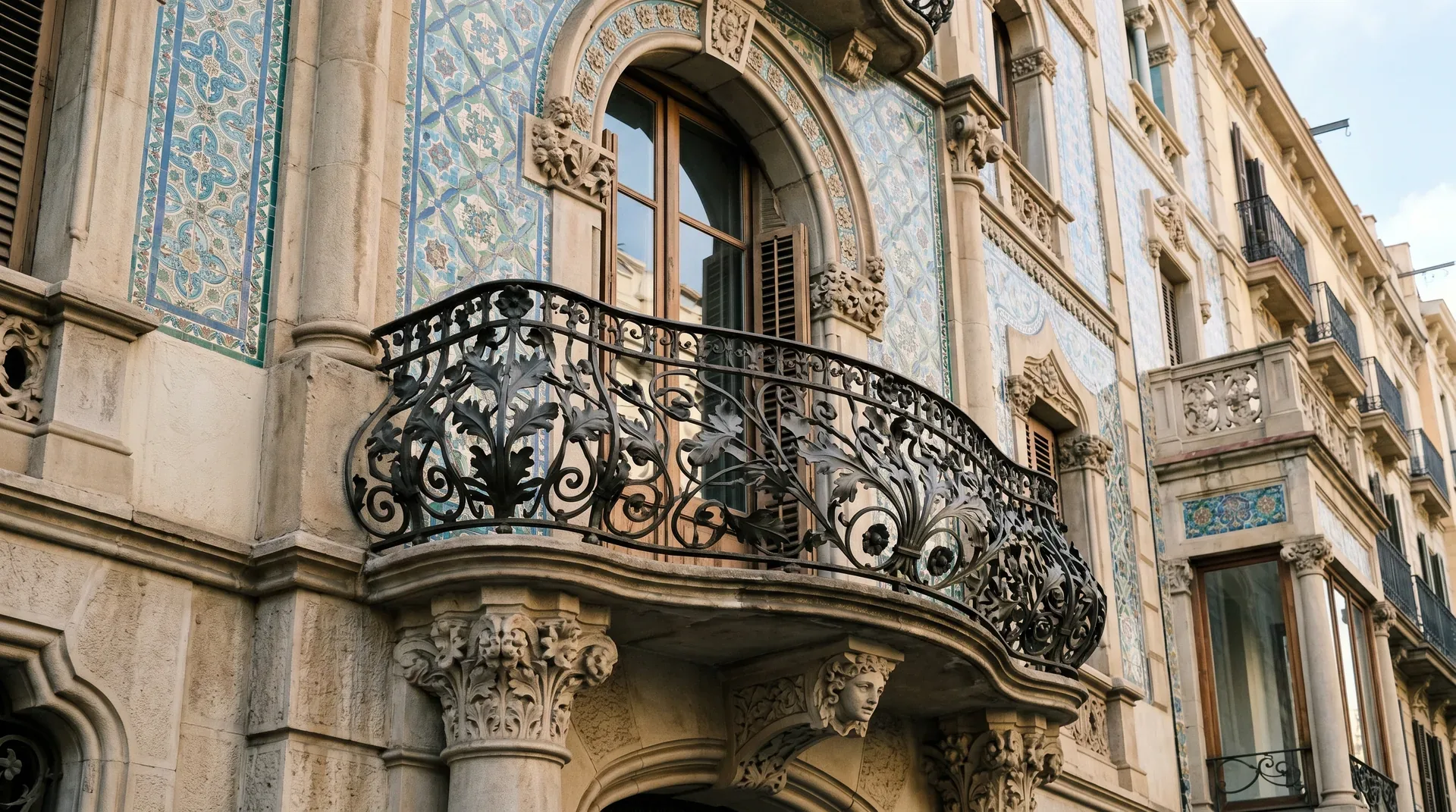
- Organic forms: Curves drawn from nature — shells, bones, leaves, waves — replace straight lines and right angles. This is most extreme in Gaudí but visible in varying degrees across the movement.
- Polychrome ceramics: Broken tile (trencadís) and glazed ceramic decoration on facades and rooftops. The colour mosaics on Park Güell and Casa Batlló's roof are iconic examples.
- Elaborate ironwork: Wrought iron balconies, gates, and structural elements treated as sculptural objects rather than purely functional ones.
- Gesamtkunstwerk (total artwork): Integration of architecture with furniture, stained glass, ceramics, ironwork, and painting into a unified aesthetic. No element was purely decorative.
- Natural symbolism: Flora, fauna, and natural materials as the primary symbolic vocabulary, contrasting with the classical mythology or religious allegory of academic architecture.
The Three Giants of Catalan Modernisme
Antoni Gaudí
1852–1926Key works: Sagrada Família, Casa Batlló, Casa Milà, Park Güell
Organic naturalism, structural innovation, deep Catholic symbolism. Developed from Modernisme into something entirely his own.
Lluís Domènech i Montaner
1849–1923Key works: Palau de la Música Catalana, Hospital de Sant Pau
Elaborate ceramic and ironwork decoration, Gothic Revival references, highly skilled integration of applied arts. UNESCO World Heritage works.
Josep Puig i Cadafalch
1867–1956Key works: Casa Amatller, Casa de les Punxes, Casa Macaya
Blend of Flemish Gothic, Catalan medieval, and Art Nouveau. More eclectic and historical than Gaudí but highly skilled. Also a major political figure.
The Eixample: Barcelona's Modernisme District
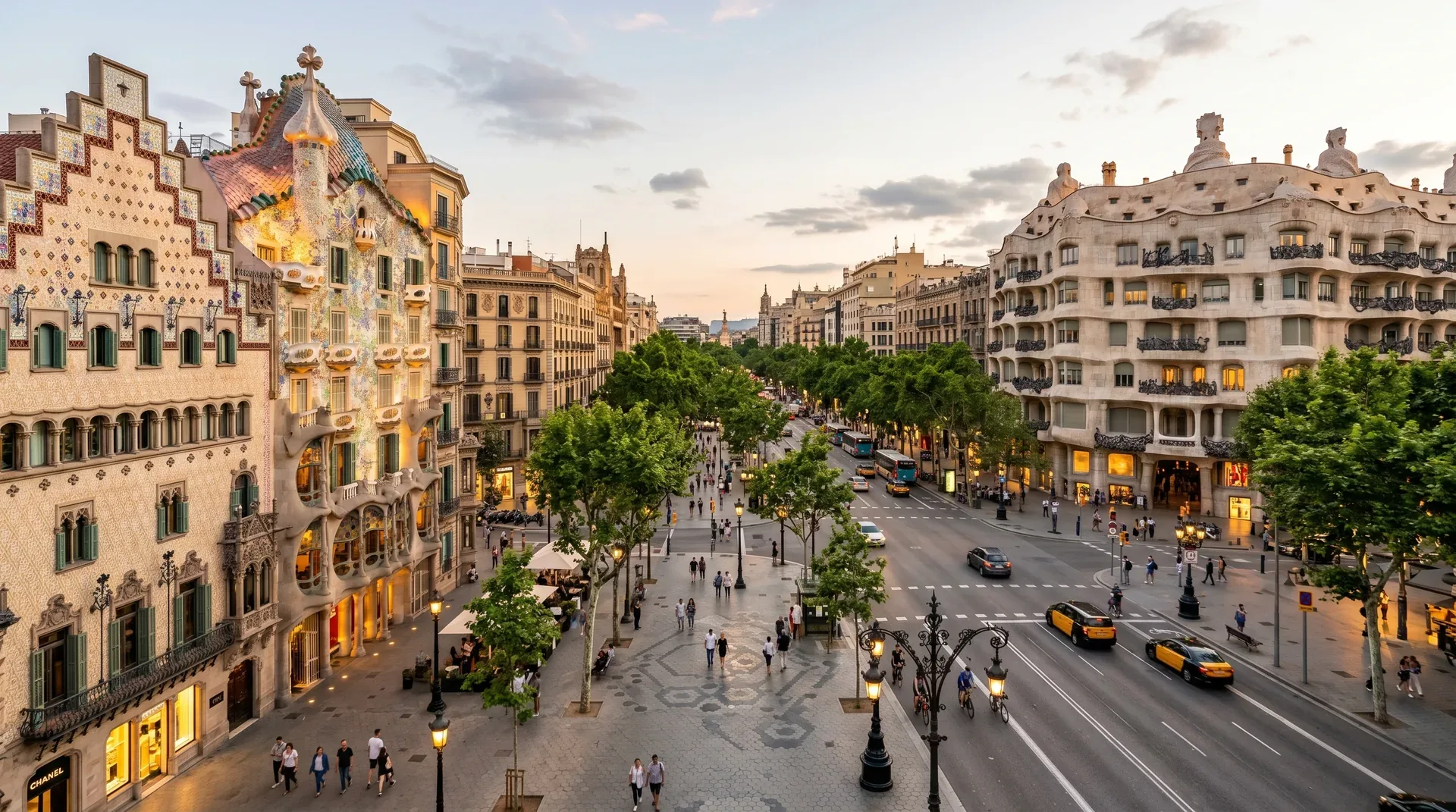
The Eixample ('Extension') district was planned by engineer Ildefons Cerdà in the 1860s as a rational expansion of Barcelona beyond its medieval walls. Its defining feature is the octagonal city block — each corner cut at 45 degrees to create intersections with natural light and ventilation. The Eixample grid was the blank canvas on which Catalan Modernisme built its most ambitious works.
By 1900, Passeig de Gràcia had become the address of choice for Barcelona's industrial bourgeoisie — the families who had made fortunes in textiles, banking, and colonial trade. They competed in commissioning the most extravagant buildings. The result is the 'Manzana de la Discordia' (Block of Discord): three major Modernisme buildings side by side — Casa Lleó Morera (Domènech i Montaner), Casa Amatller (Puig i Cadafalch), and Casa Batlló (Gaudí) — built within a decade of each other.
The Sagrada Família sits at the edge of the Eixample, occupying an entire city block. Gaudí was given the project in 1883 and spent the rest of his life on it. While the Eixample's other Modernisme buildings were residential commissions completed in years, the Sagrada Família became a life's work — and remains under construction today. Learn more in our biography of Antoni Gaudí.